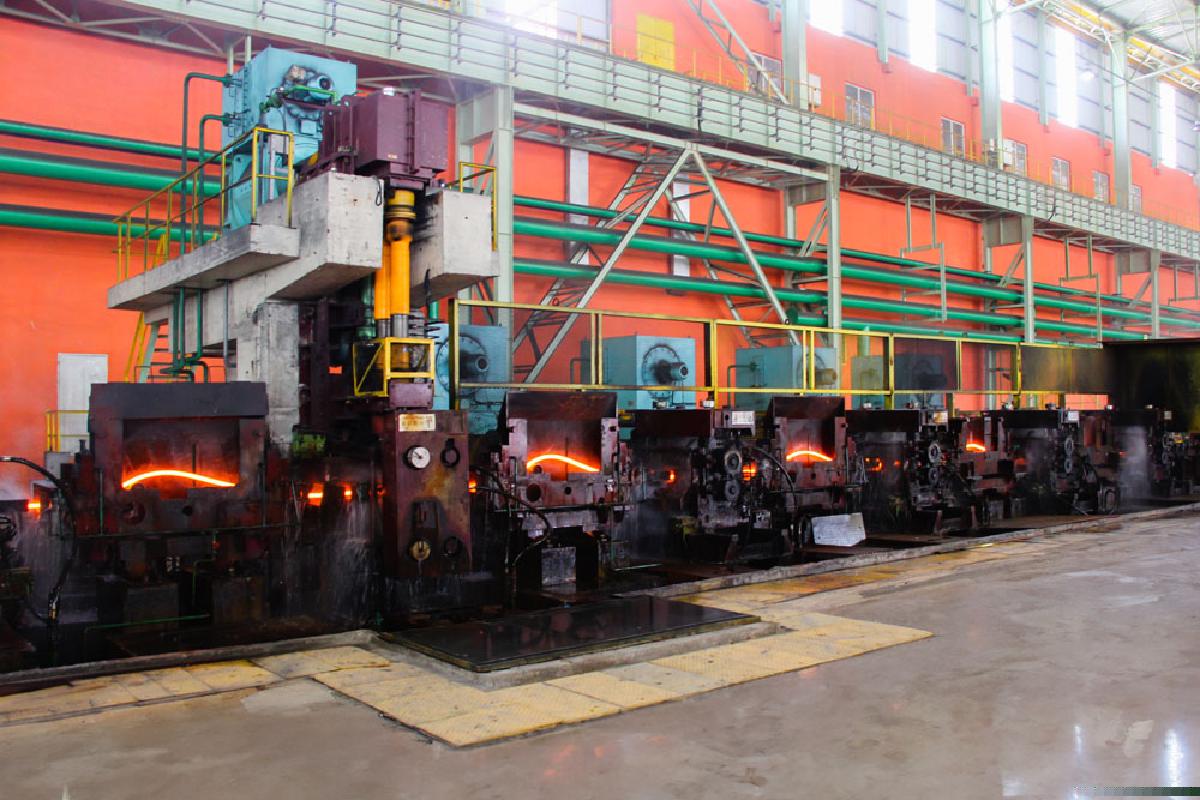

In rolling mills, safety is often discussed as a compliance requirement.
But in high-performing mills, safety is treated as a core production strategy.
As a General Manager, I have seen one clear pattern across plants:
Where safety discipline is strong, productivity, quality, and profitability follow naturally.
Safety is not a cost center.
It is a capacity multiplier.
1. Safety Is a Leadership System, Not a PPE Rulebook #
Most accidents in rolling mills do not happen because helmets or shoes were missing.
They happen because:
- Unsafe shortcuts were silently accepted
- Warning signs were ignored to meet dispatch targets
- Operators felt pressure to “keep the line running” at any cost
True safety begins at the decision table, not on the shop floor.
When leadership:
- pauses production for unsafe conditions
- rewards reporting instead of hiding incidents
- audits systems, not just people
Safety becomes part of the culture, not a checklist.
2. Hot Rolling Mills Demand Risk-Based Safety, Not Generic SOPs #
A hot rolling mill is not a standard factory.
It is a high-energy environment where molten steel, rotating equipment, and human judgment intersect.
Critical rolling mill safety risks include:
- Cobble formation during speed mismatch
- Manual intervention near red-hot material
- Improper guide and shear alignment
- Delayed reaction during breakdowns
Generic SOPs fail here.
Effective mills implement risk-based safety mapping:
- Identify top 10 hazard points per shift
- Assign ownership for each risk zone
- Review near-miss data weekly, not annually
This converts safety from paperwork into real-time control.
3. Near-Miss Reporting Is the Most Underrated Safety KPI #
Most mills track:
- Lost Time Injuries (LTI)
- Reportable accidents
High-maturity mills track:
- Near-miss frequency and response time
Every major accident has a history of ignored near-misses.
Encouraging near-miss reporting:
- builds operator confidence
- reveals weak systems early
- prevents costly shutdowns
A safe mill is not the one with zero reports —
it is the one with maximum transparent reporting.
4. Safety and Productivity Are Not Opposites #
One common myth in manufacturing is:
“Safety slows down production.”
In reality:
- Injuries cause manpower instability
- Unsafe breakdowns increase scrap
- Panic decisions reduce yield
Safe mills:
- have smoother shift handovers
- experience fewer emergency stoppages
- maintain consistent rolling temperatures
The fastest mills are usually the safest ones.
5. Training for Safety Means Thinking, Not Memorizing #
Annual safety training fails when it focuses on:
- rules memorization
- penalty awareness
Effective safety training in rolling mills includes:
- real accident case studies from similar plants
- “what would you do” scenario discussions
- cross-department learning (production + maintenance + electrical)
When operators understand why a rule exists, compliance becomes natural.
6. A GM’s True Safety Responsibility #
As a GM, safety responsibility is not delegation — it is ownership.
That means:
- personally reviewing serious near-misses
- questioning unsafe dispatch pressure
- ensuring safety CAPEX is not delayed
- leading by example during shop-floor visits
People don’t follow safety posters.
They follow behavior they observe daily.
Final Thought: Safety Is the Foundation of Manufacturing Excellence #
In rolling mills, steel strength is tested under heat and pressure.
So is leadership.
Plants that achieve long-term excellence understand one truth clearly:
You cannot build world-class production on unsafe systems.
Safety is not the absence of accidents.
It is the presence of discipline, awareness, and responsible leadership.
Thinking Beyond Compliance #
If your rolling mill is meeting targets but still facing:
- repeated near-misses
- unplanned stoppages
- safety decisions that feel reactive
- pressure points between production and protection
it may be time to step back and review the system, not just the incidents.
I occasionally work with rolling mills to review safety from an operational lens —
looking at decision flow, risk points, and leadership practices rather than checklists and paperwork.
No presentations.
No generic safety frameworks.
Just practical observations based on how high-performing mills actually operate.
If this perspective resonates,
a quiet, no-obligation discussion can often uncover more than months of internal reviews.